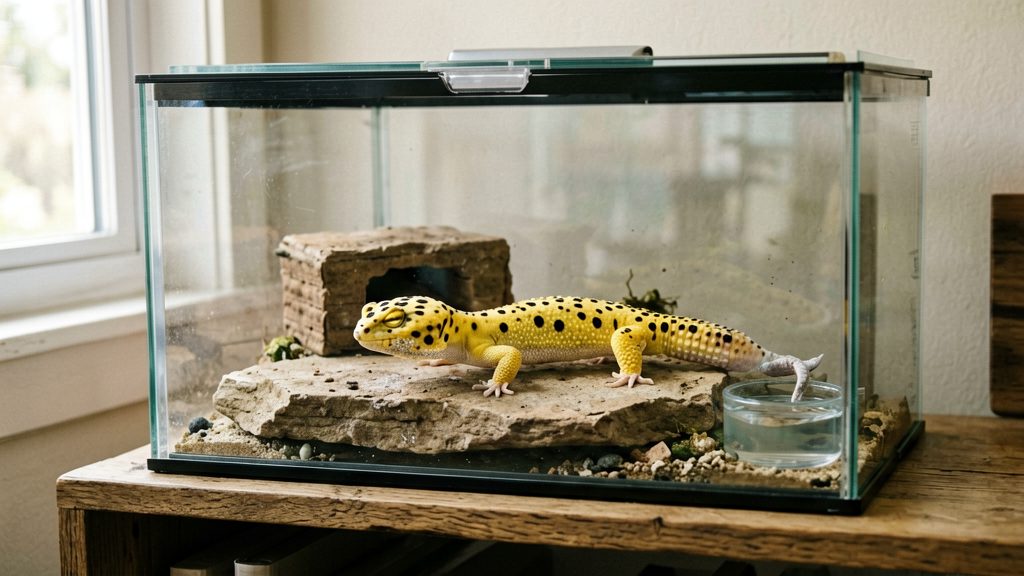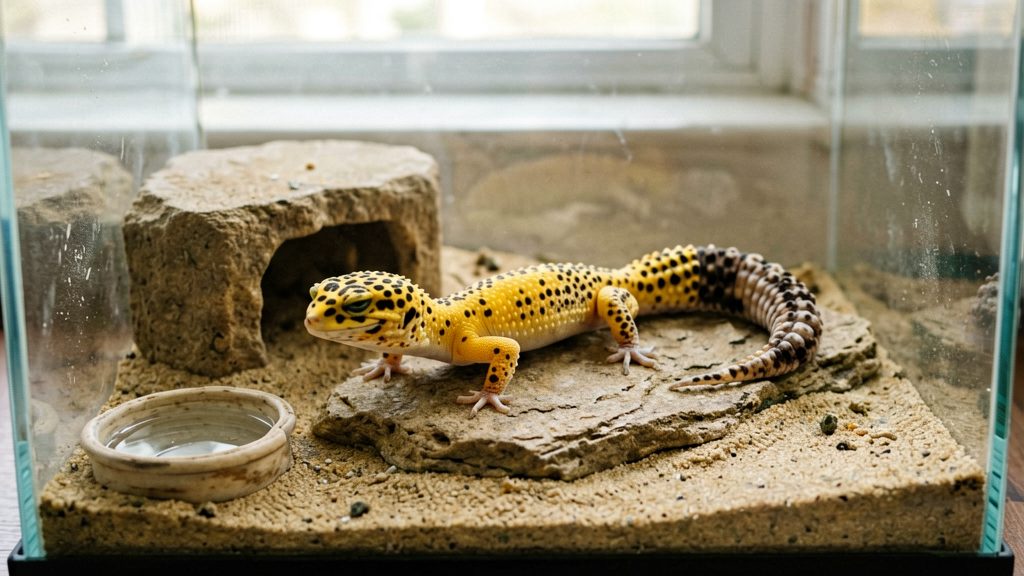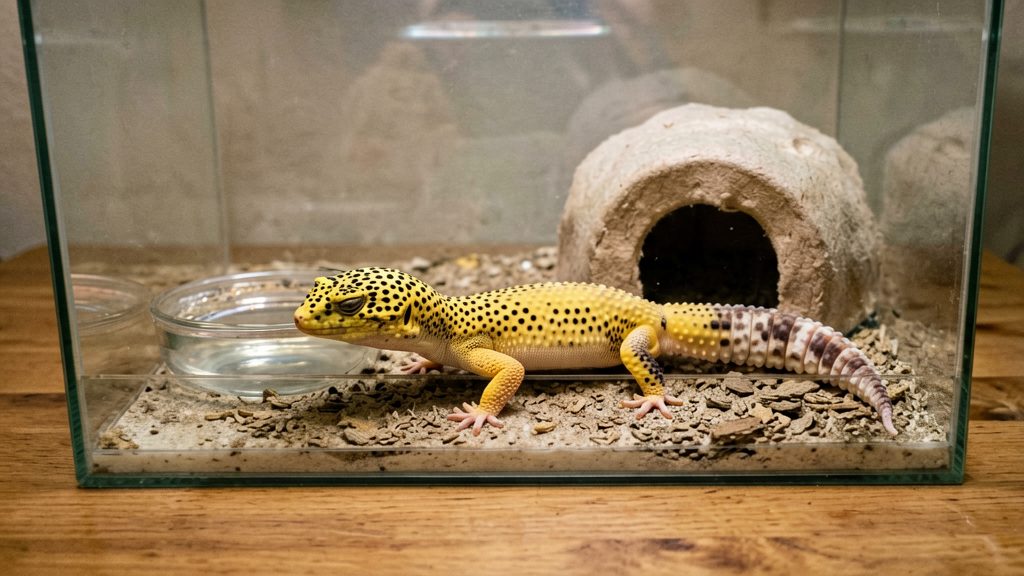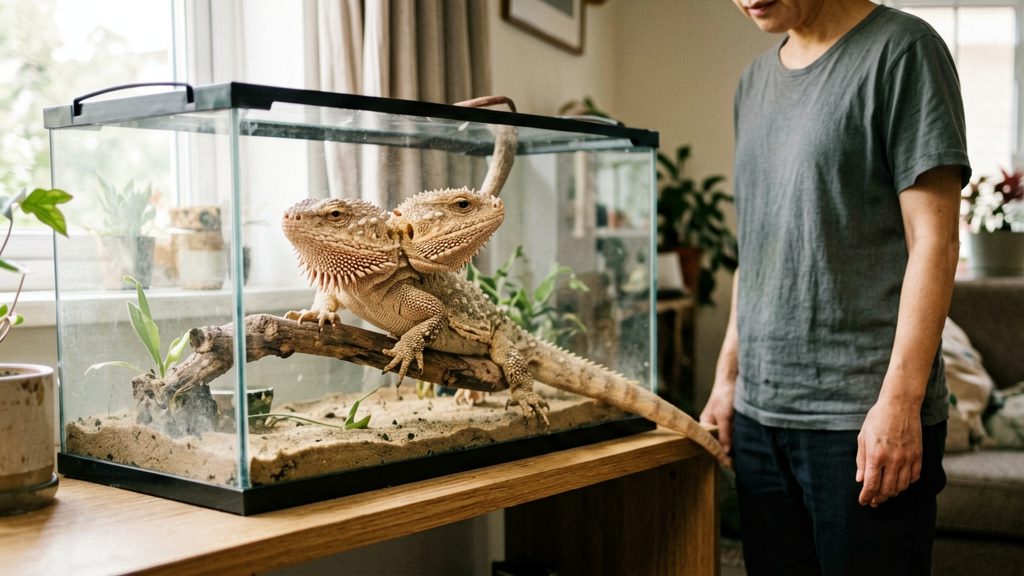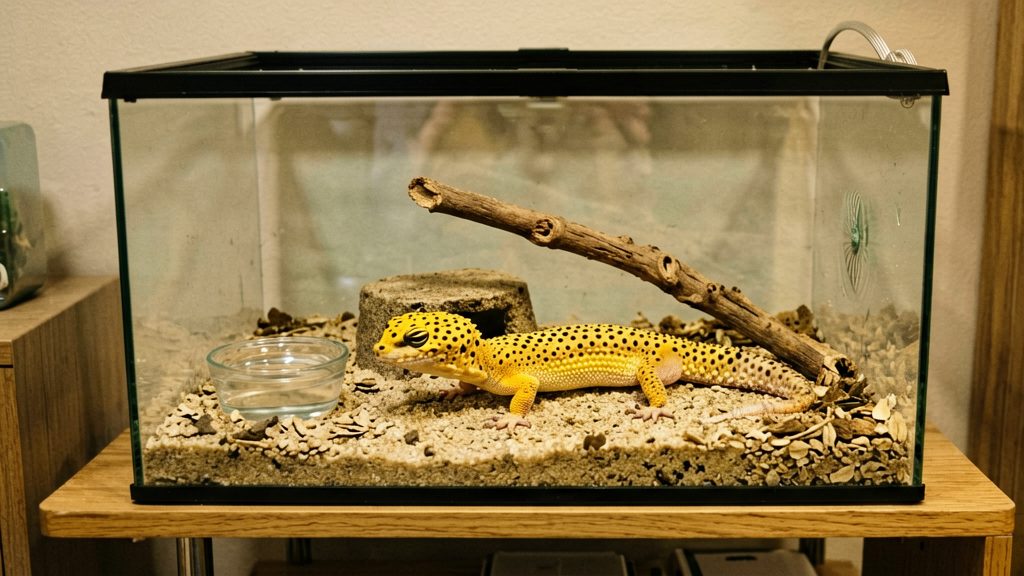
A leopard gecko is a strong default choice for the best first reptile for beginners, provided you are comfortable caring for live feeder insects. A crested gecko or corn snake may fit your household better, depending on feeding preferences and available space. A bearded dragon is another realistic option, but its equipment and food preparation demand more work. Choose by the care you can sustain throughout adulthood.
Which beginner reptile fits your routine?
Compare these specific species before shopping for an enclosure. Their different diets and habitat layouts create different responsibilities.
| Species | Food commitment | Habitat priority | Main compatibility issue |
|---|---|---|---|
| Leopard gecko, Eublepharis macularius | Live feeder insects | Usable floor space and sheltered retreats | Most activity occurs around dusk or at night |
| Crested gecko, Correlophus ciliatus | Complete prepared gecko diet, following its label | Height, climbing routes, and foliage | Sensitive to overheating and excessive handling |
| Corn snake, Pantherophis guttatus | Appropriately sized frozen-thawed rodents | Stretching room, cover, and secure closures | Everyone involved in care must accept rodent feeding |
| Central bearded dragon, Pogona vitticeps | Live insects and varied vegetables | A substantial enclosure with a basking area | Greater heating, lighting, and dietary demands |
The Wisconsin Herpetological Association identifies temperament, adult size, longevity, and husbandry requirements as selection factors. Its beginner-lizard guidance also highlights the specific limitations listed for the geckos and bearded dragon above.
Before choosing, describe your normal week on paper: when you are home, who provides care during travel, and where supplies will be stored. If a required task depends on someone else overcoming a strong dislike of the animal or its food, resolve that before making a commitment.
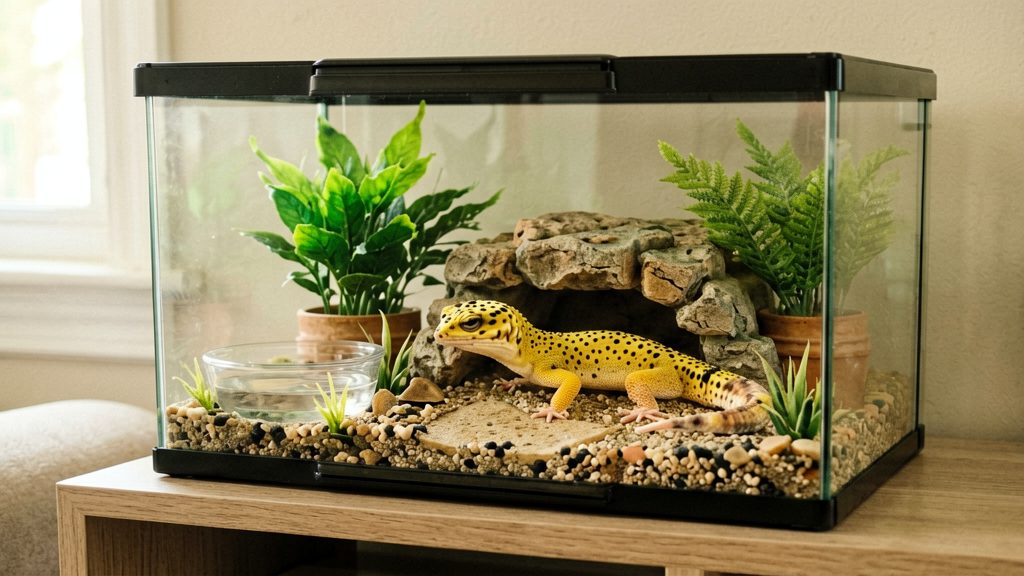
Leopard gecko: a manageable introduction to lizard care
What the feeding routine actually involves
Keeping feeder insects means maintaining another group of living animals. They need suitable housing, food, and hydration before being offered to the gecko. Feeding insects a nutritious diet before use is called gut-loading.
Use varied, appropriately sized feeders. Follow a supplementation plan matched to the animal and its lighting, rather than adding overlapping calcium and vitamin products by guesswork. Remove uneaten insects that could bother or bite the gecko. The RSPCA’s leopard gecko guidance explains these feeding responsibilities and reports a potential lifespan of up to 20 years.
Plan for observation and voluntary interaction
Let the animal settle before attempting handling. Scoop gently with its body and feet supported; stop if it backs away or attempts to bite. A calm individual may become accustomed to being held, but handling tolerance varies. Choose this species because you enjoy watching and maintaining it, with interaction as an additional possibility.
Crested gecko: convenient food, attentive environmental care
Check what the food label promises
Look for a product explicitly labeled as a complete crested gecko diet. Follow that formula’s directions for mixing, life stage, storage, and supplemental feeding. A fruit treat and a complete food serve different purposes.
Some complete formulas make live insect feeding optional, as shown in these manufacturer feeding instructions. That can simplify meal preparation for someone who does not want to maintain feeders. Keep the actual package instructions with your care supplies so a substitute caregiver can prepare the same food correctly.
Evaluate the room during hot weather
Assess the intended location when the room is warmest. An enclosure that works during cool weather may need a different management plan in summer. Decide how you would control excessive room heat before bringing the gecko home.
Inside the habitat, provide connected branches, planted cover, and accessible feeding locations. Monitor humidity with a hygrometer, a gauge that measures moisture in the air, and preserve ventilation. Provide fresh drinking water even when misting creates droplets. The RSPCA’s crested gecko guidance describes these habitat needs and gives a captive lifespan of 15–20 years.
Corn snake: assess adult length and feeding acceptance
Measure the future enclosure location
A small juvenile gives a misleading impression of the space you will eventually need. Smithsonian’s National Zoo lists corn snakes at approximately 24–72 inches long and reports lifespans up to 23 years in human care.
Plan housing around the individual’s eventual length. The RSPCA recommends an enclosure that allows a corn snake to stretch out fully. Check door closures, ventilation openings, and cable passages for escape routes. Provide snug shelters at the warm and cool ends, plus securely installed climbing opportunities.
Before taking responsibility for a particular snake, ask for its recent feeding record: prey type, prey size, and whether it reliably accepts frozen-thawed meals. Have the existing routine explained clearly rather than assuming you can immediately change it.
Separate handling from digestion
Support the snake along its body without squeezing or restraining it tightly. The RSPCA advises waiting at least 48 hours after feeding before handling and avoiding handling around shedding. These pauses should be part of your expectations for interaction.
Frozen rodents reduce injury risks associated with live prey, but freezing does not eliminate Salmonella. Use dedicated preparation equipment, keep rodents separate from human food, and never thaw them in food preparation areas or a microwave. See the FDA’s feeder-rodent safety guidance.
When is a bearded dragon worth the extra work?
A bearded dragon can suit someone who wants to observe a reptile during the day and enjoys preparing varied meals. UC Davis describes these lizards as generally docile and receptive to handling, while specifying dedicated UVB lighting, heating, and substantial housing.
For scale, UC Davis School of Veterinary Medicine’s care guidance, published April 12, 2019, recommends at least 48 inches of length and 24 inches of width for a built enclosure, with additional requirements for height and ventilation. Reserve a permanent location that can accommodate the complete habitat and lighting arrangement.
Food preparation includes offering suitable leafy greens, such as collards, mustard greens, or endive, alongside appropriately sized insects. Feeding requirements change with growth, so obtain an age-specific plan before choosing a juvenile.
This species makes sense when you actively want these tasks. Its appealing behavior does not reduce the work required behind the scenes.
How do you prepare the enclosure before bringing a reptile home?
Control heat and measure the result
Reptiles use their surroundings to regulate body temperature. Arrange heating so the animal can move between warmer and cooler areas while retaining access to shelter.
Choose a thermostat compatible with the heating equipment. Its sensor, often called a probe, must be installed according to the equipment instructions and secured against displacement. Use separate thermometers to check the temperatures the animal actually experiences. A thermostat reading can describe conditions at its probe without accurately representing a distant basking surface; this distinction is explained in thermostat manufacturer guidance.
Record the species-specific daytime and nighttime targets in your care plan. Run the furnished enclosure through its normal lighting and heating cycles before arrival. Investigate unstable readings before putting an animal inside.
Match UVB to the installed equipment
Select lighting using the species, fixture, reflector, mounting arrangement, and distance to the animal. Lamp strength alone does not establish the exposure at a basking position. Check the manufacturer’s guidance for the exact setup, including any intervening screen.
Provide shaded retreats so the reptile can choose its exposure. The manufacturer’s lighting guide explains how lamp distance and the animal’s basking behavior affect selection. Follow the lamp’s replacement instructions as well. For leopard geckos, the RSPCA recommends access to low levels of UVB despite their crepuscular activity pattern.
Choose furnishings you can maintain
Select substrate, meaning the enclosure’s floor covering, for the species and its moisture requirements. Check that shelters remain accessible after the water dish and other furnishings are installed. Secure heavy decorations so digging or climbing cannot destabilize them.
Make routine cleaning physically possible: you should be able to reach corners, remove soiled material, and lift out dishes without dismantling the habitat. Attractive furnishings are useful only when they also support safe movement and practical maintenance.
What responsibilities should your care plan include?
Create a supply list covering consumables and replacement equipment. Include food, supplements where appropriate, substrate, cleaning supplies, lamps, and electricity. Maintain a separate allowance for veterinary care rather than treating it as an optional future expense.
Assign a named caregiver for absences. Write down the established feeding routine, equipment settings, normal observations, and whom to contact if something changes. Show that person how to secure the enclosure before relying on them.
Keep a simple record of feeding, shedding, cleaning, and equipment changes. This gives a caregiver a usable reference and helps you explain the animal’s recent care accurately when seeking professional advice.
How do you keep a reptile safely in a US household?
According to the CDC, updated January 13, 2026, reptiles can carry Salmonella while appearing healthy. Their equipment and surroundings can also transmit germs.
The CDC does not recommend reptiles for households with young children, adults 65 or older, or people with weakened immune systems. Children younger than 5 should not touch reptiles or their environments. Consider this before selecting any species.
Build these practices into the household routine:
- Wash with soap and running water after handling the animal, its food, or its equipment.
- Keep reptiles and their supplies away from areas where people prepare, store, serve, or eat food.
- Clean habitat equipment outdoors when possible. If using a laundry sink or bathtub, clean and disinfect the area afterward.
- Supervise the reptile outside its enclosure and prevent unrestricted roaming.
- Avoid kissing the animal or holding it near your face.
Frequently asked questions
How can I find a veterinarian who sees reptiles?
Use the Association of Reptile and Amphibian Veterinarians website’s Find a Vet tool. Call the practice to confirm that it sees your intended species and ask how urgent appointments are handled.
Will a crested gecko’s dropped tail grow back?
No. The RSPCA states that crested geckos cannot regrow a dropped tail. Never grasp one by its tail.
Can I release a pet reptile if I can no longer keep it?
No. The CDC (2026) advises against releasing unwanted reptiles because it can harm the animal and the environment. Contact a reptile rescue for help arranging responsible rehoming.