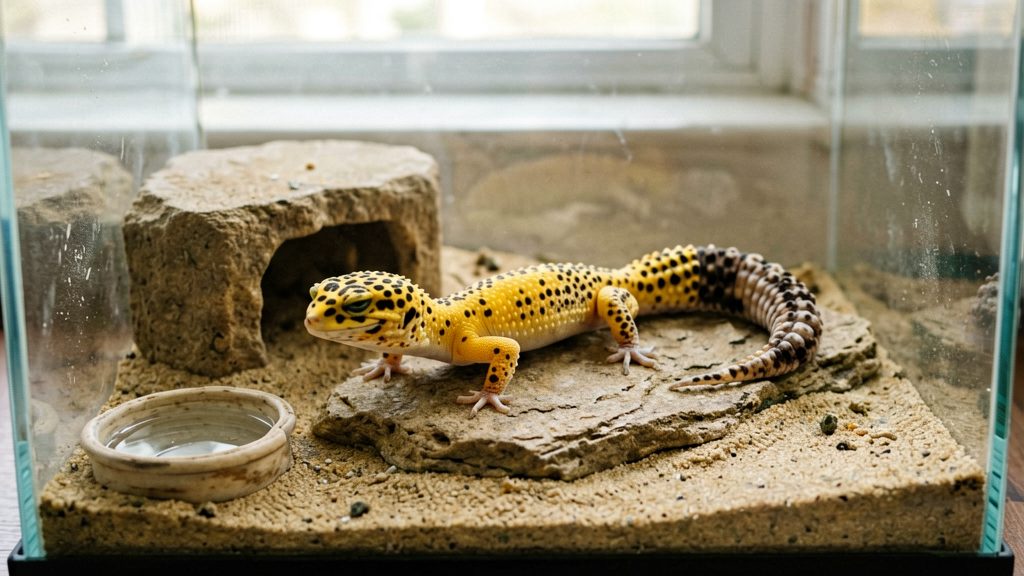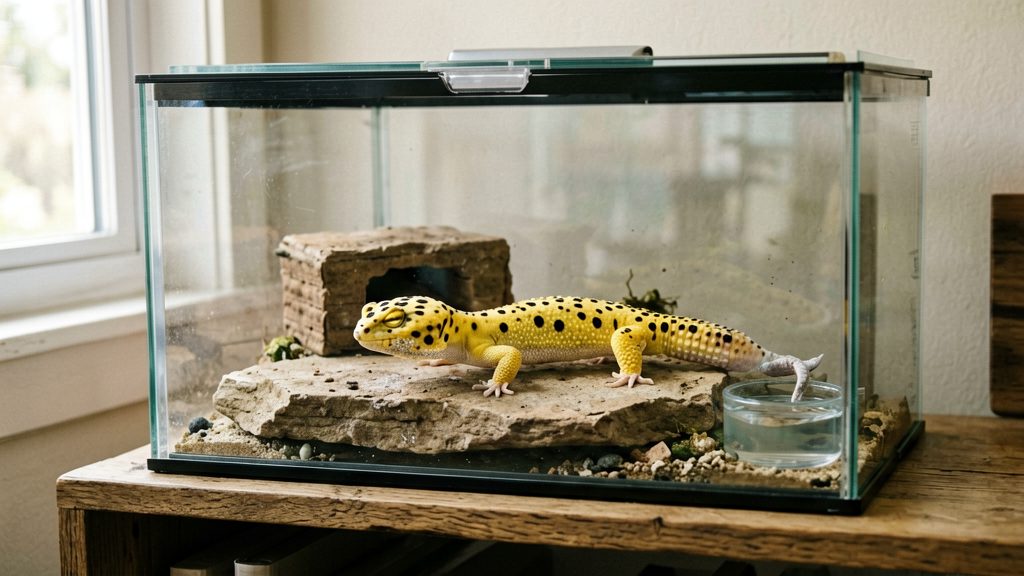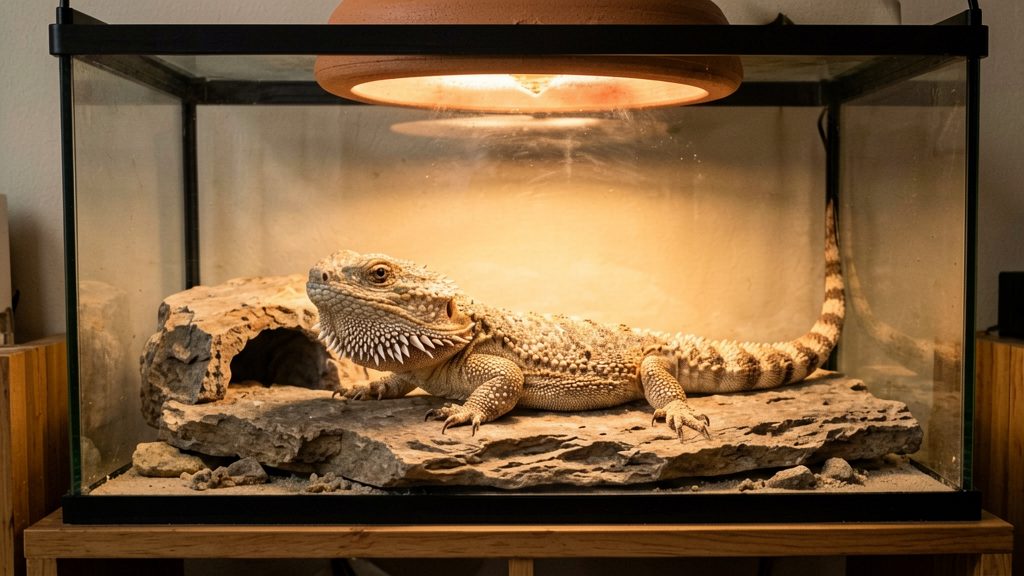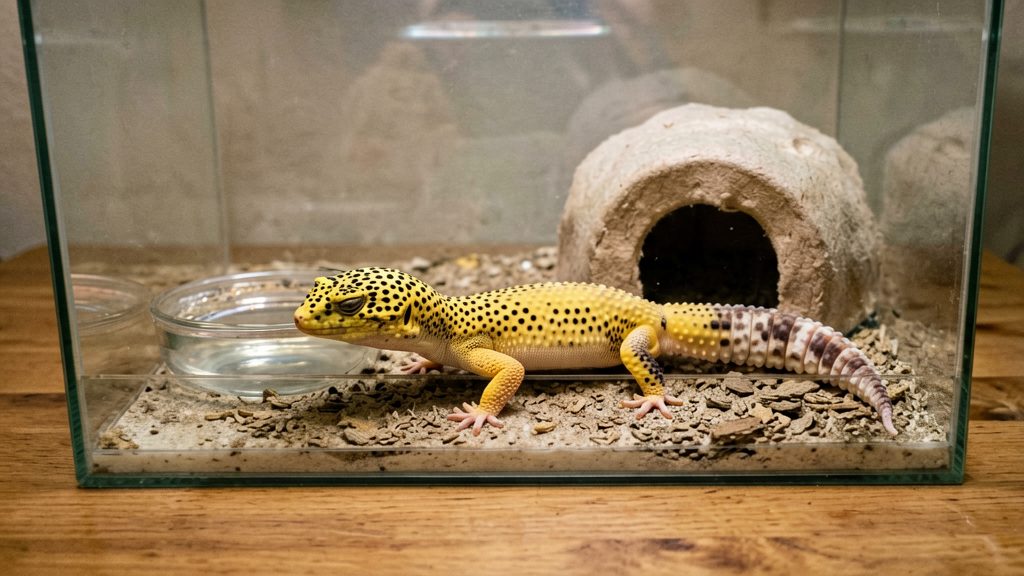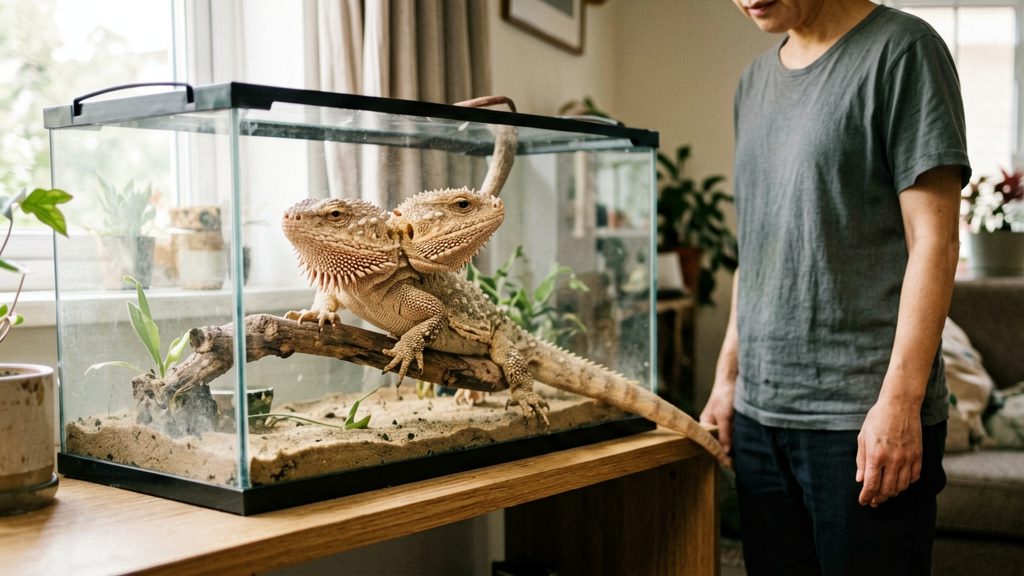
To care for a pet bearded dragon step by step, prepare a complete habitat before bringing the animal home, establish a feeding plan for its life stage, and make observation part of everyday care. Use measured conditions through daytime and overnight checks to decide when the habitat is ready for its occupant.
Step 1: How much enclosure space should you provide?
For an adult, start your enclosure search at 4 × 2 × 2 feet, measured as length × width × height. This is the minimum recommended in a veterinarian-written husbandry guide updated in 2021; a larger enclosure provides more room for movement and enrichment.
Check usable interior dimensions rather than relying on a gallon label. The animal must be able to turn, travel between different conditions, and move around furnishings without squeezing through gaps.
House your dragon individually. Territorial disputes and competition for resources can injure animals that previously appeared to tolerate each other. Choose secure doors or a fitted lid, effective ventilation, and surfaces you can reach for maintenance. These housing considerations are covered in the RSPCA’s care guidance.
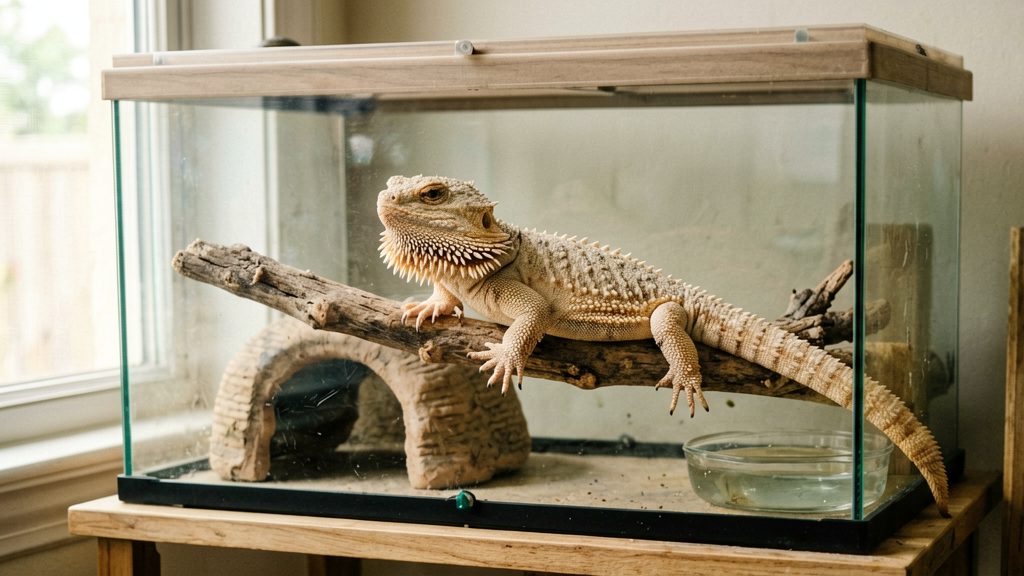
Step 2: Arrange the floor, shelters, and climbing areas
For a beginner setup, use newspaper as an easily inspected floor covering. This makes droppings visible and lets you replace soiled material without dismantling the habitat.
Avoid calcium sand, gravel, and wood chips. Swallowed bedding can cause an intestinal blockage. Discuss any move to loose substrate with a reptile veterinarian, particularly for a young dragon. See the University of California, Davis substrate recommendations (2019).
Build the usable layout around:
- An elevated basking platform that supports the entire animal.
- A sheltered retreat on the warm side and another on the cool side.
- Secure branches or rocks for climbing.
- Open routes between these features.
Stabilize heavy furnishings so they cannot tip or fall onto the dragon. These arrangements follow manufacturer habitat guidance.
Step 3: How should you measure and control heat?
A bearded dragon regulates its body temperature by moving between warmer and cooler places. Heat the basking end from above while preserving a cooler retreat.
The following targets come from the veterinarian-written husbandry guide updated in 2021:
| Measurement | Target | Measuring tool |
|---|---|---|
| Basking surface | 105–115°F | Infrared thermometer aimed at the resting surface |
| Warm-side air | 95–100°F | Digital air thermometer |
| Cool-side air | 75–80°F | Separate digital air thermometer |
A surface reading and an air reading describe different conditions; neither substitutes for the other. Prevent contact with hot bulbs and heaters by following the equipment’s mounting clearances and veterinary safety guidance.
Use a thermostat compatible with your chosen heater. For a dimmable basking lamp, select a compatible dimming controller. Follow its instructions for probe placement and secure the probe against displacement. Check the controller’s electrical load rating and keep its control unit outside the enclosure. Consult the manufacturer’s thermostat instructions for the actual device.
For a straightforward indoor nighttime plan, the University of California, Davis (2019) recommends 70–75°F. If the room becomes colder, provide controlled supplemental warmth without visible light.
Step 4: Install UVB and a consistent daylight schedule
UVB allows the skin to produce vitamin D3, which supports calcium absorption. A bright-looking bulb or a “full spectrum” label does not establish that adequate UVB reaches the animal. Keep glass and plastic out of the path between the UVB source and the dragon, as explained in veterinary lighting guidance.
Choose a reptile UVB system whose manufacturer provides installation guidance for bearded dragons. Then:
- Identify the exact lamp, compatible fixture, and reflector.
- Use the specified lamp-to-animal measuring point.
- Account for any screen between the lamp and basking area.
- Position useful UVB exposure where the dragon basks.
- Check exposure with a suitable UV Index meter when available.
The manufacturer’s UV Index guide explains why distance, enclosure configuration, and mesh affect exposure. Follow the instructions for your complete system rather than borrowing another keeper’s mounting distance.
Use a timer for 10–12 hours of daytime lighting, following manufacturer species-care guidance. Record the lamp’s installation date and replace it according to its manufacturer’s schedule; continued visible light does not confirm adequate UVB output.
Step 5: Build meals around life stage and variety
Bearded dragons eat plants and insects throughout life. Growing juveniles need a greater emphasis on insects; adults need a more plant-heavy diet. Washington State University (2026) distinguishes these life-stage needs.
Offer a fresh salad daily. The University of California, Davis (2019) recommends calcium-rich leafy greens such as collards, dandelion greens, escarole, endive, and turnip greens, with vegetables such as squash, green beans, and bell peppers providing variety.
Wash produce and cut it into manageable pieces. Mix ingredients so the dragon cannot easily eat only a favorite item.
Suitable feeder options include crickets, dubia roaches, silkworms, and hornworms. Gut-load feeders: give the insects nutritious food before offering them to the dragon. Keep high-fat feeders such as waxworms as occasional treats. These food choices are described in veterinary feeding guidance.
For a starting schedule, the veterinarian-written husbandry guide updated in 2021 suggests daily insect meals for juveniles and 2–3 insect meals weekly for adults. Hatchlings need a separate growth-stage plan. Ask a reptile veterinarian to adjust portions and frequency for the animal’s growth and body condition. An insect count alone is misleading when feeder sizes differ.
Step 6: Put supplement instructions into writing
Calcium and reptile multivitamin products serve different purposes. Check whether each contains vitamin D3, and make a written schedule that accounts for the diet and installed UVB system.
Use the amount and application method on the product label, with your reptile veterinarian reviewing the overall plan. Do not combine several fortified foods and powders without checking their overlapping ingredients. More powder does not automatically produce a better-balanced meal.
The manufacturer’s supplementation guidance explains the different roles of calcium and vitamin products and distinguishes indoor from outdoor conditions. Keep the original packaging available so anyone caring for the animal can follow the same directions.
Step 7: Manage drinking water and humidity separately
Provide continuous access to fresh drinking water in a shallow, stable dish. Place it away from the heat source so it does not become excessively warm. These placement and access recommendations appear in manufacturer care guidance.
Measure humidity with a digital hygrometer rather than judging the enclosure by appearance. Washington State University (2026) recommends 30–40% relative humidity.
If readings remain high, assess ventilation, spills, and moisture-retaining materials before changing the heating system. If conditions remain unusually dry, ask your reptile veterinarian about a localized humid retreat. Avoid trying to correct humidity by soaking the entire enclosure; retain dry resting areas and monitor the result of any adjustment.
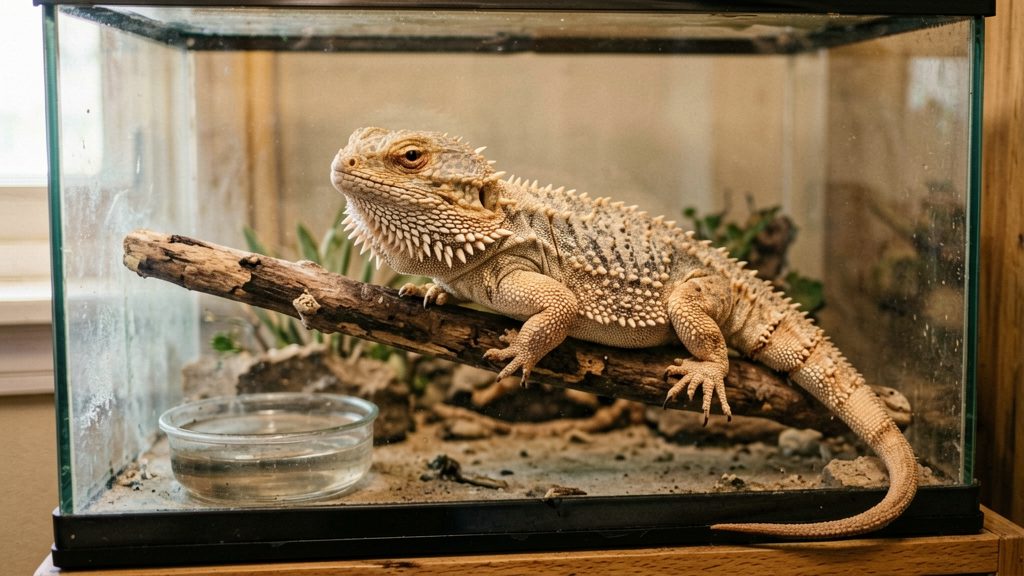
Step 8: Introduce handling and protect household hygiene
Let a newly arrived dragon settle before unnecessary handling. When it is comfortable with your presence, approach where it can see you and gently scoop from underneath, supporting its body and feet. If it retreats or threatens to bite, stop and try later. The RSPCA’s handling guidance describes this approach.
Keep sessions brief enough to avoid chilling, and separate other pets during handling.
According to the CDC (2026), healthy-looking reptiles can carry Salmonella. Wash hands with soap and running water after contact with the dragon, its food, or habitat equipment. Children younger than 5 should not handle the reptile or touch its environment.
Keep the animal and its supplies away from areas where people prepare, store, serve, or eat food. Supervise every outing from the enclosure.
Step 9: Clean according to what is dirty
Remove feces, the white urate portion of waste, and contaminated floor covering promptly. Washington State University (2026) recommends daily spot cleaning. Remove leftover food and uneaten live feeders after meals.
For a more complete clean:
- Move the dragon into a secure temporary container away from cleaning products.
- Remove furnishings and wash away debris with detergent and water.
- Rinse before applying a compatible disinfectant.
- Follow the disinfectant label’s dilution and wet contact time.
- Complete the required rinsing and allow everything to dry before reassembly.
The CDC’s cleaning guidance (2026) distinguishes cleaning from disinfection and warns against mixing bleach with other cleaners.
Wash habitat equipment outdoors when possible, away from food gardens. Otherwise, use a laundry sink or bathtub and clean and disinfect the area afterward. Never use a food-preparation sink. Follow the CDC’s reptile-specific hygiene guidance (2026).
Step 10: When should routine care give way to veterinary advice?
During shedding, look for retained skin around toes and the tail tip. Constricting layers can damage underlying tissue. Do not peel or cut attached skin; arrange professional guidance if it remains tight or the area changes appearance. This risk is explained in veterinary shedding guidance.
A sustained change in appetite or activity also deserves attention. Brumation is a seasonal reduction in activity, but similar behavior can occur with illness. Do not deliberately cool the enclosure or withhold food to induce it without a veterinarian’s plan.
Record what changed and bring your environmental readings, feeding history, and equipment details to the appointment. Veterinary housing guidance advises contacting a veterinarian when a dragon becomes unusually inactive or stops eating rather than assuming brumation.
Frequently asked questions
Can I feed my bearded dragon fireflies or insects from the yard?
Never feed fireflies: they are toxic to lizards. Yard insects may carry pesticides or fertilizers. Choose insects raised for feeding reptiles, following this veterinary feeding guidance.
Can I put a glass terrarium outside for natural sunlight?
Use a secure, ventilated outdoor enclosure made for that purpose, with shade and constant supervision. A veterinarian-written care guide specifies a non-glass enclosure for outdoor time.
Is it safe to kiss my bearded dragon?
The CDC (2026) advises against kissing reptiles or holding them close to your face. Close facial contact can frighten the animal and increase the chance of a bite.