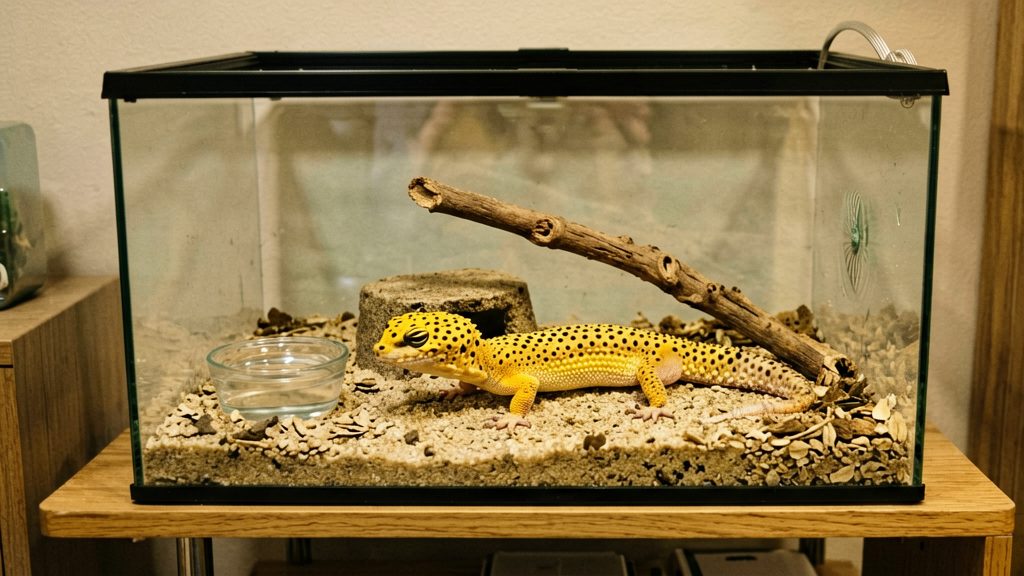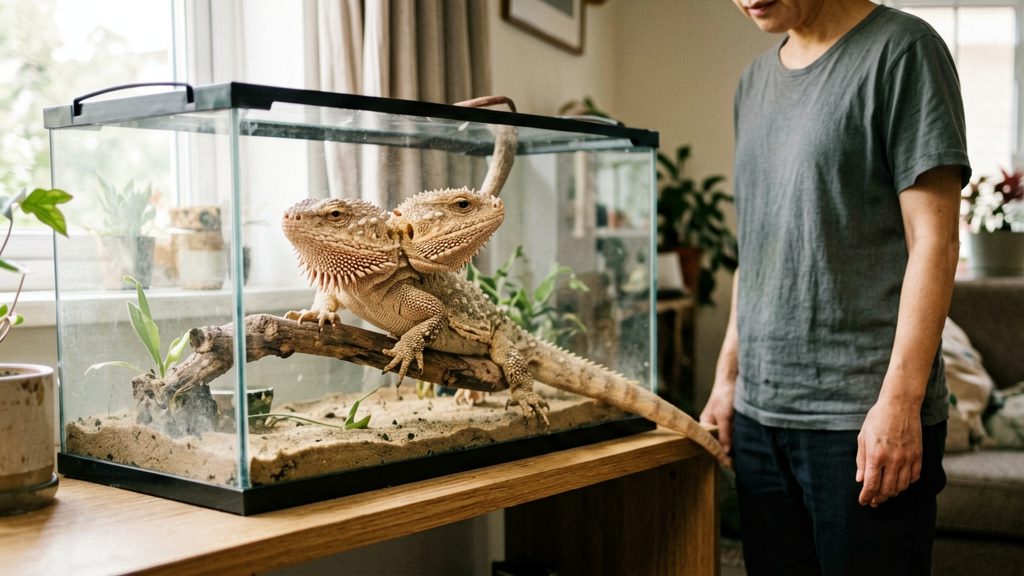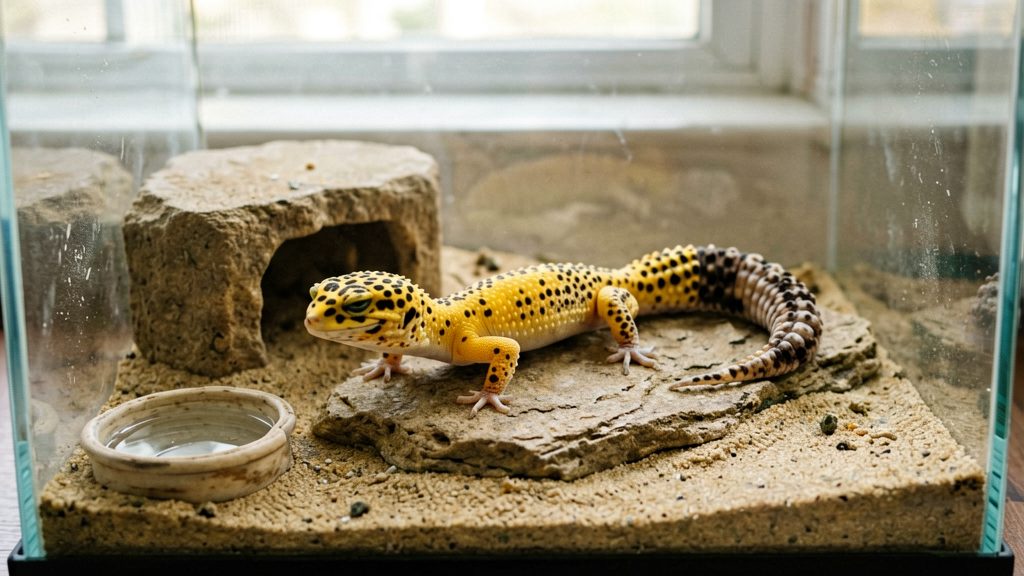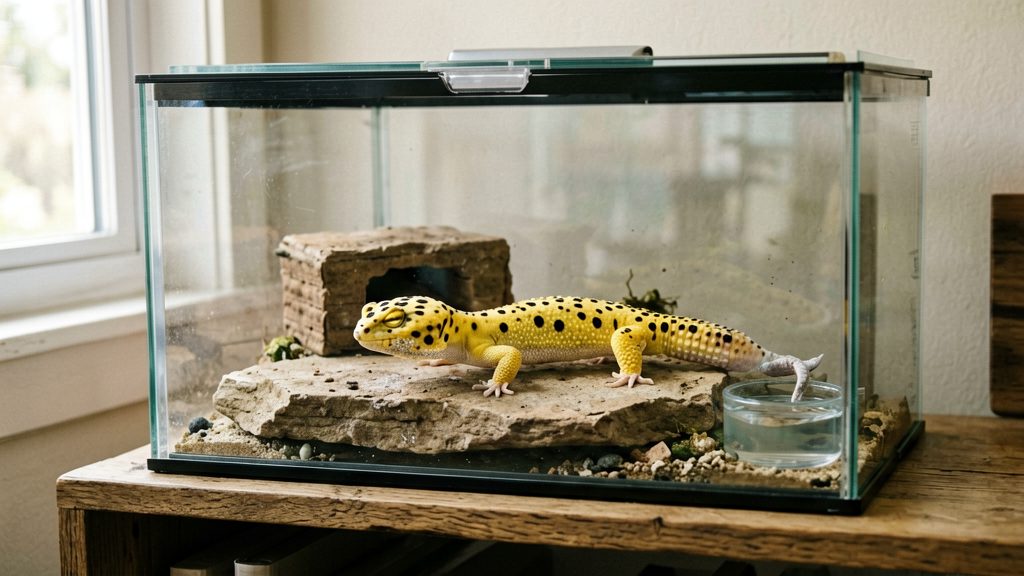
An established adult corn snake is a practical easy care reptile pet for busy adults who can maintain a suitable enclosure and a dependable care routine. A leopard gecko or crested gecko may fit better if you prefer a lizard. Make the decision around the feeding tasks, home conditions, and backup care you can reliably provide, rather than expecting a reptile to look after itself between meals.
Which feeding routine fits your schedule?
Start with the task you are least willing to do. Discomfort with a reptile’s normal diet is a reason to choose a different species, rather than improvise substitutes after bringing it home.
| Reptile | Normal feeding approach | What to consider before choosing |
|---|---|---|
| Adult corn snake | Appropriately sized, thawed rodents. The Royal Veterinary College describes adult feeding intervals of approximately 1–2 weeks, depending on weight. | Can you store and prepare prey safely, and obtain the appropriate size consistently? |
| Leopard gecko | A varied insect diet, with supplements used as directed. | Are you comfortable keeping feeder insects and managing their care between feeding sessions? |
| Crested gecko | A formulated crested-gecko diet intended as a staple, used according to its feeding instructions. | Can you prepare small portions, maintain clean feeding dishes, and follow the selected formula’s complete feeding directions? |
Sources: Royal Veterinary College corn-snake guidance, reviewed December 2022, leopard-gecko nutrition guidance, and formulated crested-gecko food instructions.
Treat the snake’s feeding interval as a starting point for an individual feeding plan. Growth, body condition, and the prey offered affect that plan. Put the next feeding date on your calendar and record what the animal actually eats; moving every meal to a convenient day without considering the animal can create an unsuitable routine.
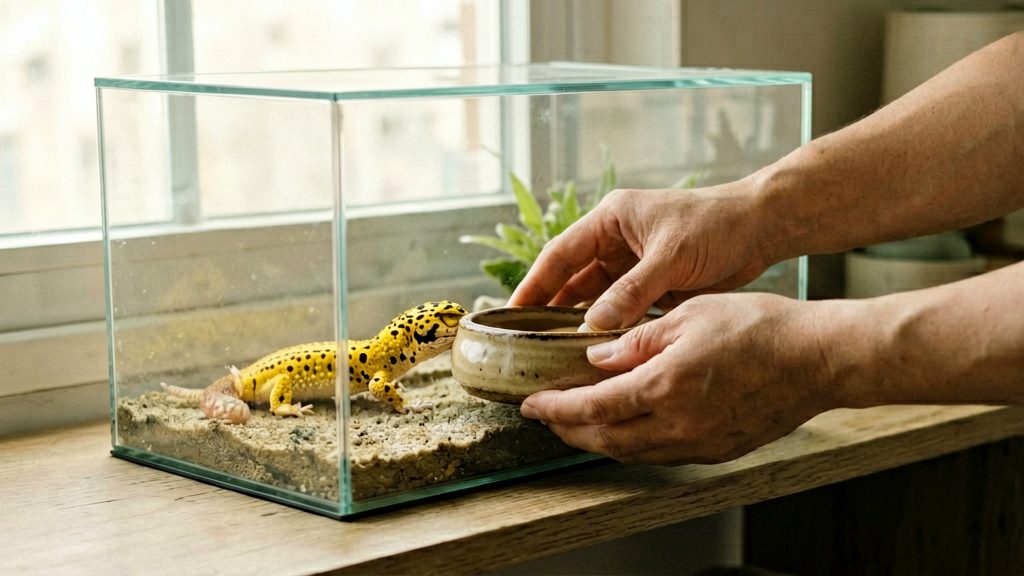
Why consider an established adult?
An adult with a documented care history lets you evaluate an existing routine. You can ask about its usual meals, recent weight trend, shedding, and behavior instead of building your decision around what a young reptile might become.
Ask the current keeper or rescue for:
- The exact food currently accepted and the most recent successful meals.
- Available weight records and any recent unexplained changes.
- Photographs and measurements of the current enclosure.
- Details of the heating, lighting, and humidity arrangement.
- Any ongoing care needs that would complicate an ordinary workweek.
Request a demonstration of unfamiliar tasks. Watching someone prepare a meal or operate the enclosure latch can reveal practical difficulties that a care description misses.
Keep appearance separate from suitability. An attractive animal with unclear feeding records may require more uncertainty than your schedule can accommodate. If the history raises concerns, arrange an assessment with a veterinarian who treats reptiles before committing to that animal.
How should you plan the enclosure?
Measure usable space
Choose the permanent enclosure location before choosing the animal. Measure the available footprint, door clearance, and access needed to remove dishes and furnishings. A habitat that is awkward to reach makes routine care harder to maintain.
For corn snakes, the Royal Veterinary College recommends a minimum enclosure measuring 48 × 24 × 24 inches, with larger housing encouraged. The RSPCA additionally advises that the snake must be able to stretch out fully, so a longer individual needs a correspondingly longer enclosure. These are husbandry recommendations from UK organizations, not US legal minimums. Royal Veterinary College; RSPCA.
A crested gecko needs vertically oriented housing with secure climbing routes and foliage or other cover. Check whether you can reach the upper feeding area without destabilizing branches. Also assess summer room conditions: this species is sensitive to excessive heat, making an overheating room a significant housing problem. Crested-gecko habitat guidance.
Provide choices within the habitat
For a corn snake, place snug shelters in both warmer and cooler areas so it can choose a temperature while remaining concealed. Secure climbing furnishings and check lid edges, door tracks, and cable openings for escape routes. RSPCA corn-snake guidance.
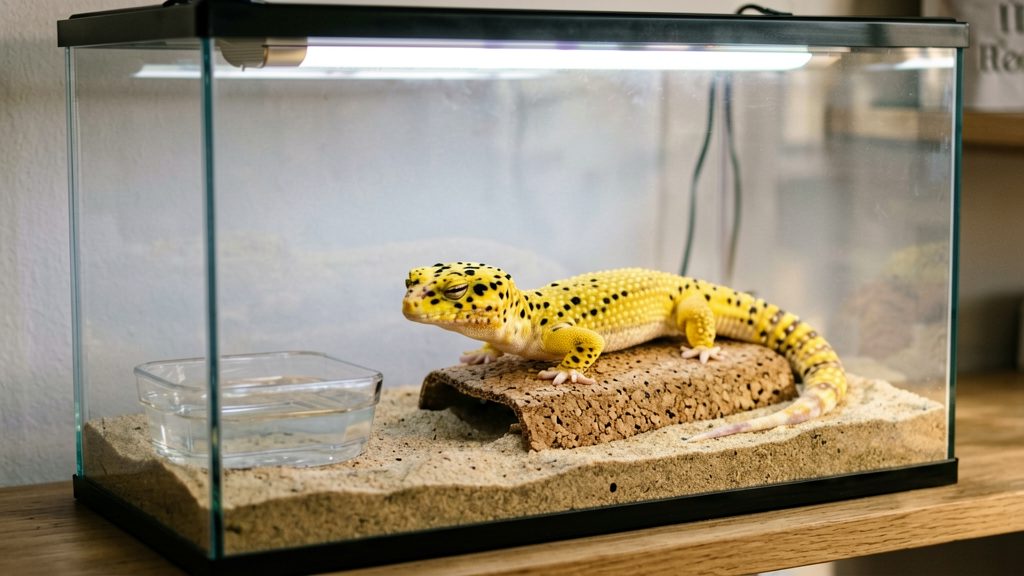
A leopard gecko also needs a humid hide: an enclosed shelter containing damp material that creates a locally moist retreat for shedding. Maintain that retreat separately from the overall enclosure conditions. RSPCA leopard-gecko guidance.
Select substrate for the species and life stage, including its opportunities for natural behavior. Decide how you will remove contaminated material before installing elaborate decorations; the floor covering should remain accessible for maintenance.
How do you make heating and lighting dependable?
A thermostat regulates a connected heater. A thermometer measures the resulting temperature. Use both: the controller’s setting does not replace checking conditions where the reptile actually rests.
Choose a thermostat compatible with the heater and its control method. Follow the equipment instructions for sensor placement, permitted electrical load, installation, and moisture protection. Secure the sensor so ordinary animal activity cannot move it away from its intended position. North American thermostat operating instructions illustrate why installation must match the heating arrangement.
As a corn-snake example, the RSPCA recommends a daytime basking zone of approximately 82–86°F and a cool end of approximately 68–75°F, converted from its Celsius guidance. These targets belong to that species and those locations within the enclosure; they are not shared settings for the geckos discussed here. Guard accessible heat sources against animal contact. RSPCA corn-snake guidance.
For UVB, obtain a species-appropriate lighting plan and follow the lamp manufacturer’s installation directions. Mounting distance and replacement instructions matter. The Royal Veterinary College recommends low-level UVB for corn snakes, positioned at the manufacturer’s specified distance, with lamps replaced according to instructions or their output checked. Royal Veterinary College.
Run the finished habitat before introducing the animal. Check its behavior through the intended daytime and nighttime cycle, including when your home heating or air conditioning changes. Record the normal readings and equipment settings so later deviations are recognizable.
What preparation does each feeding method require?
Rodent preparation
Use dedicated containers and utensils for prey preparation. Keep feeder rodents away from human food and food preparation areas, and do not thaw them in a microwave. Freezing does not eliminate Salmonella. Clean and disinfect equipment and surfaces that contact the prey. These precautions follow FDA guidance on feeder rodents.
Confirm the supplier’s storage and thawing instructions before purchasing a supply. Establish a method that produces fully thawed prey without involving household meal preparation equipment.
Feeder-insect care
Keep feeder insects in a secure, ventilated container and provide appropriate food and hydration. Gut-loading means feeding the insects a suitable nutritious diet before offering them to the reptile. The RSPCA recommends this preparation for leopard-gecko feeders. RSPCA.
Follow the selected calcium and vitamin products’ directions, accounting for the animal’s UVB arrangement with professional guidance. Remove uneaten crickets after feeding rather than leaving them loose in the enclosure. Leopard-gecko feeding guidance.
Prepared gecko diets
Check that the label identifies the food as suitable for your species and intended feeding purpose. Follow its directions for mixing, portion size, feeding frequency, storage, and disposal. Whether insects or additional supplements belong in the routine depends on the formula and feeding plan. Do not transfer instructions between different foods or assume that a fruit treat is a complete diet. Formulated crested-gecko food documentation.
What belongs in your workday care routine?
Attach enclosure checks to a reliable habit, such as arriving home. Use a short log with observations rather than relying on memory.
| Check | What to record or address |
|---|---|
| Environmental readings | Actual temperatures and humidity compared with the established care plan. |
| Water | Availability, cleanliness, and whether the container has been tipped or fouled. |
| Animal observation | Changes in posture, movement, appearance, or usual behavior. |
| Waste | Location and removal of droppings or contaminated substrate. |
| Equipment and enclosure | Displaced sensors, loose fittings, damaged cables, and unsecured openings. |
Fresh drinking water must remain available. For corn snakes specifically, the Royal Veterinary College advises changing it daily. Royal Veterinary College.
Respond to a meaningful change instead of waiting for the next scheduled meal. If a leopard gecko has retained skin around its toes or eyes, do not pull it away; seek advice from a reptile veterinarian. RSPCA.
How can you keep cleaning safe and manageable?
Create a dedicated cleaning kit containing brushes, containers, replacement substrate, and an appropriate disinfectant. Follow the disinfectant label for preparation, contact time, rinsing, and safe return of the animal. Clean visible dirt away before disinfecting; the FDA distinguishes physical cleaning from the subsequent process of killing germs. FDA.
The CDC warns that healthy-looking reptiles and their habitats can carry Salmonella. Wash your hands with soap and running water after handling the animal, its food, waste, or equipment. Keep reptile supplies out of the kitchen. Clean habitat equipment outside when possible, away from food-growing areas and drinking-water sources; use a suitable separate cleaning area indoors when necessary. CDC, January 13, 2026.
When rearranging furnishings after cleaning, restore the intended layout before returning the reptile. A moved shelter or elevated branch can change where the animal sits relative to its heating and lighting.
When should a caregiver take over?
Arrange coverage whenever travel or another commitment prevents you from completing the established routine. Schedule in-person checks on every day you are away. A gap between meals does not establish a safe period without supervision.
Give the caregiver a written handover containing:
- The animal’s normal environmental readings and photographs of equipment positions.
- Dated tasks and clearly identified supplies.
- Instructions for operating doors, locks, and controls.
- Your contact details and the reptile veterinarian’s information.
- A prearranged response to heater failure, excessive room temperature, or a power outage.
Have the caregiver complete a supervised practice visit. They should demonstrate the tasks and explain what they would do if conditions depart from the written plan. Remote monitoring can provide useful information, but someone still needs to be able to reach the animal and act.
Before acquiring any reptile, check state and local restrictions and your housing agreement. Also consider household suitability: the CDC advises against keeping reptiles in homes with young children, older adults, or people with weakened immune systems. Locate a veterinarian who treats reptiles and confirm that your care arrangement can continue through changes in work, housing, and travel. CDC, January 13, 2026.
Frequently asked questions
Does a leopard gecko need another gecko for company?
No. The RSPCA recommends housing leopard geckos individually because they do not need social company and can be aggressive toward each other. RSPCA guidance.
Should I pick up a leopard gecko by its tail?
Never. Pressure on the tail can cause the gecko to drop it. Gently scoop up the animal while supporting its body and feet. RSPCA handling guidance.
Does a corn snake need supplements added to its prey?
The RSPCA advises that corn snakes should not need dietary supplements when fed good-quality prey. Discuss any proposed change with a reptile veterinarian rather than adding supplements routinely. RSPCA feeding guidance.